Curve blends AI and large-scale clinical data to read organ health from blood, advancing non-invasive monitoring for chronic disease.
How we think about chronic disease can be changed, and it starts with the idea that blood is not just a snapshot of what’s wrong, but a running log of how the body is aging.
California-based biotech Curve Biosciences is building on that idea. The company is developing AI-powered blood diagnostics that aim to detect organ-specific disease signals earlier and more precisely, using what it calls Whole-Body Intelligence [1].
In geroscience, conditions like liver cirrhosis are increasingly seen not as isolated failures of a single organ, but as the end result of long-running biological stress – fibrosis, senescent cell buildup and chronic inflammation. In other words, the familiar “inflammaging” process finally manifests as a clinical endpoint. Cirrhosis, in that sense, is not sudden, but a slow accumulation made visible.
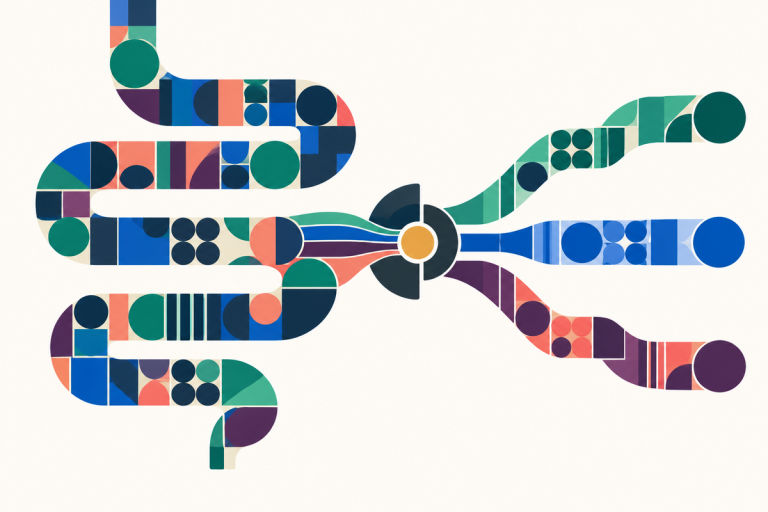
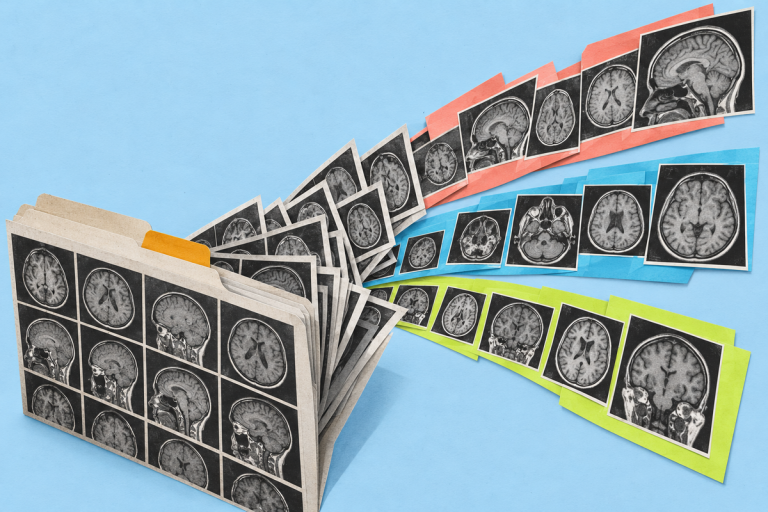
Curve’s approach rests on a simple yet ambitious premise: that blood carries molecular traces from across the body, including early signs of organ stress. To decode that, the company uses a proprietary Whole-Body Atlas, a curated dataset of tissue samples representing different organs and disease states. Think of it as a biological reference map, where each organ has a kind of molecular “fingerprint.”
From there, AI models trained on this atlas analyze circulating DNA fragments found in blood. These fragments carry epigenetic signals, chemical markers that reflect how genes are being switched on or off in different parts of the body.
A useful analogy is weather forecasting. Instead of looking at a single thermometer reading, Curve Biosciences is trying to interpret atmospheric patterns to predict what’s happening across an entire climate system.
The output is what the company calls Whole-Body Blood Tests, designed to translate these complex signals into actionable insights about organ health and disease progression.
One of the more technical but important milestones announced by Curve Biosciences is the acceptance of its genomic AI foundation model research at the International Conference on Learning Representations (ICLR), which runs 23–27 April 2026.
ICLR is one of the most selective venues in machine learning, and Curve’s work sits at the growing frontier of treating DNA not just as code but as a language that can be modeled, embedded and interpreted by AI systems.
The research explores how large genomic models can be continually trained using data from the Whole-Body Atlas. Over time, the models begin to recognize methylation patterns – epigenetic modifications – directly from DNA sequences. In simpler terms, the AI is learning to “hear” biological signals that are usually too subtle or complex for traditional clinical tools to detect.
Beyond the computational work, Curve Biosciences also reported results from a large multi-center clinical study focused on liver cirrhosis, a condition that remains difficult to monitor early and consistently in clinical practice.
The study included 1,482 patients across 23 clinical sites, making it one of the largest real-world datasets used for this kind of AI-driven blood analysis.
Here, the workflow is important: patient blood samples were analyzed using Whole-Body Blood Tests, then used to train and evaluate Curve’s AI system. The model was first trained on data from 885 patients and then tested in a fully blinded set of 597 patients.
The company reports strong performance in this independent validation group, particularly in identifying disease progression – arguably the most clinically important challenge in the management of cirrhosis.
Today, standard monitoring often relies on ultrasound imaging and protein-based blood tests. These tools are useful, but they can be inconsistent and may miss early or subtle progression. Curve’s system, instead, attempts to filter out broader biological noise, isolating signals that reflect organ-specific decline.

“Cirrhosis patients face fragmented and ineffective monitoring approaches, resulting in low adherence and missed opportunities to detect disease progression early,” said Ritish Patnaik, PhD, CEO & Co-Founder, Curve Biosciences. “This study shows how Whole-Body Intelligence can transform how chronic liver disease is monitored, enabling earlier detection of disease progression and more precise clinical decision-making.”
From a longevity perspective, liver cirrhosis is particularly instructive. It is not just a disease of the liver; it is often the visible endpoint of long-term inflammatory burden across the system. That’s where the connection to geroscience becomes clearer. Fibrosis, senescence and chronic inflammation are increasingly viewed as shared biological drivers of aging across multiple organs. The liver simply becomes one of the first places where this cumulative damage becomes clinically obvious.
“These findings validate our approach of combining high-resolution biological data with advanced AI to unlock clinically meaningful signals from blood,” said Dr Amit Singal, Chief Medical Officer, Curve Biosciences and Chief of Hepatology at the University of Texas Southwestern Medical Center. “A more accurate, non-invasive monitoring tool has the potential to improve outcomes by identifying disease progression earlier, when disease interventions are most effective.”
Curve is now preparing a peer-reviewed publication of its findings and moving toward regulatory and reimbursement pathways for its liver cirrhosis monitoring test. However, the broader trajectory stands out: a shift from organ-based diagnostics to system-wide biological interpretation.
If this direction holds, it subtly changes how we think about aging and disease. Instead of waiting for organs to fail in isolation, we begin to read the body as a continuously updating system, one in which early inflammatory and fibrotic changes are no longer invisible.
In that sense, longevity science is about extending the period during which the body’s decline is detectable, understandable and, crucially, intervenable. Curve Biosciences’ proposition is that blood, properly decoded, already contains that information. The challenge is learning how to read it before the body makes it obvious.